



Fermented Garlic in Honey -A Simple, Traditional Remedy Made the Right Way
Introduction
There’s something deeply comforting about returning to simple, traditional preparations—especially the ones that have stood the test of time.
Fermented garlic in honey is one of those recipes. Made with just two ingredients, it has been used for generations as both a natural remedy and a flavorful addition to everyday cooking.
As simple as it is, this is also a preparation where quality and care truly matter. Using local, organic ingredients and following safe fermentation practices makes all the difference—not only in flavor, but in how well this ferment develops over time.
If you’ve been curious about fermentation, this is one of the easiest and most rewarding places to start.
Why You’ll Love This Recipe
✔ Only 2 ingredients
✔ No cooking required
✔ Long shelf life
✔ Supports seasonal wellness
✔ Beginner-friendly fermentation
✔ Adds depth to both sweet and savory dishes
Choosing the Right Ingredients Matters
For a recipe this simple, your ingredients are everything.
I strongly recommend using:
Organic garlic, ideally locally grown
Raw, unpasteurized honey, preferably from a local producer
Why this matters:
Fresh, local garlic tends to be more potent and flavorful
Raw honey contains natural enzymes and beneficial compounds that support fermentation
Fewer additives = better, more reliable fermentation
This is one of those recipes where going local isn’t just a preference—it’s part of what makes it work beautifully.
Why Using a Weight Matters
Keeping the garlic fully submerged under the honey is essential.
Prevents exposure to air
Reduces risk of mold
Encourages proper fermentation
Keeps everything evenly coated
Without a weight, garlic can float above the surface, increasing the chance of spoilage.
👉 If you don’t have a weight, you can:
Flip the jar daily
Use a clean small jar or improvised weight
But for consistency and safety, a proper fermentation weight is well worth it.
Step-by-Step Method
1. Prepare the garlic
Peel the garlic cloves. You can leave them whole or lightly crush them to help release juices and speed up fermentation.
2. Fill the jar
Place the garlic cloves into a clean glass jar.
3. Add the honey
Pour the honey over the garlic until it is completely covered.
4. Add the weight
Place your fermentation weight on top to keep all the garlic submerged.
5. Cover the jar
You have two options:
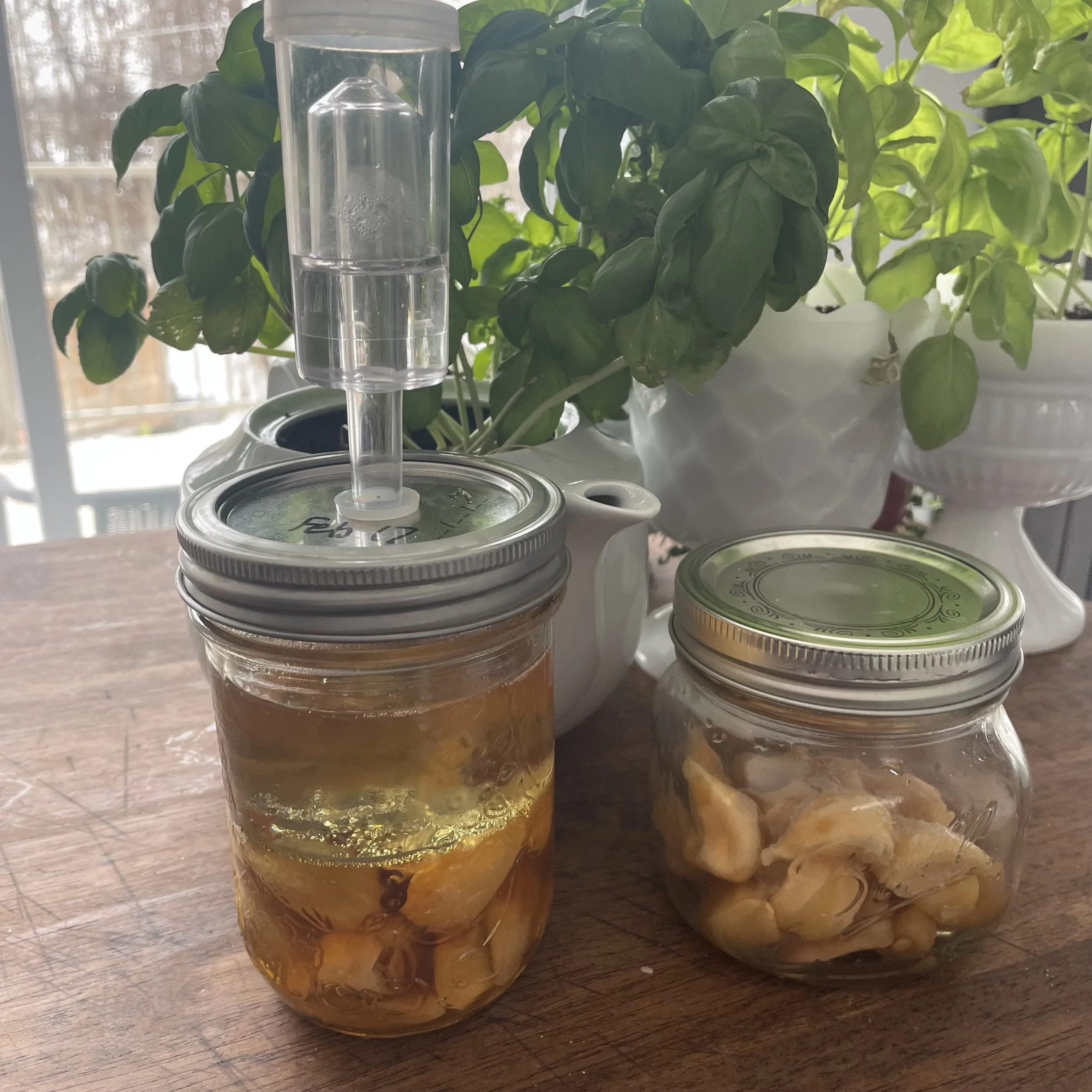
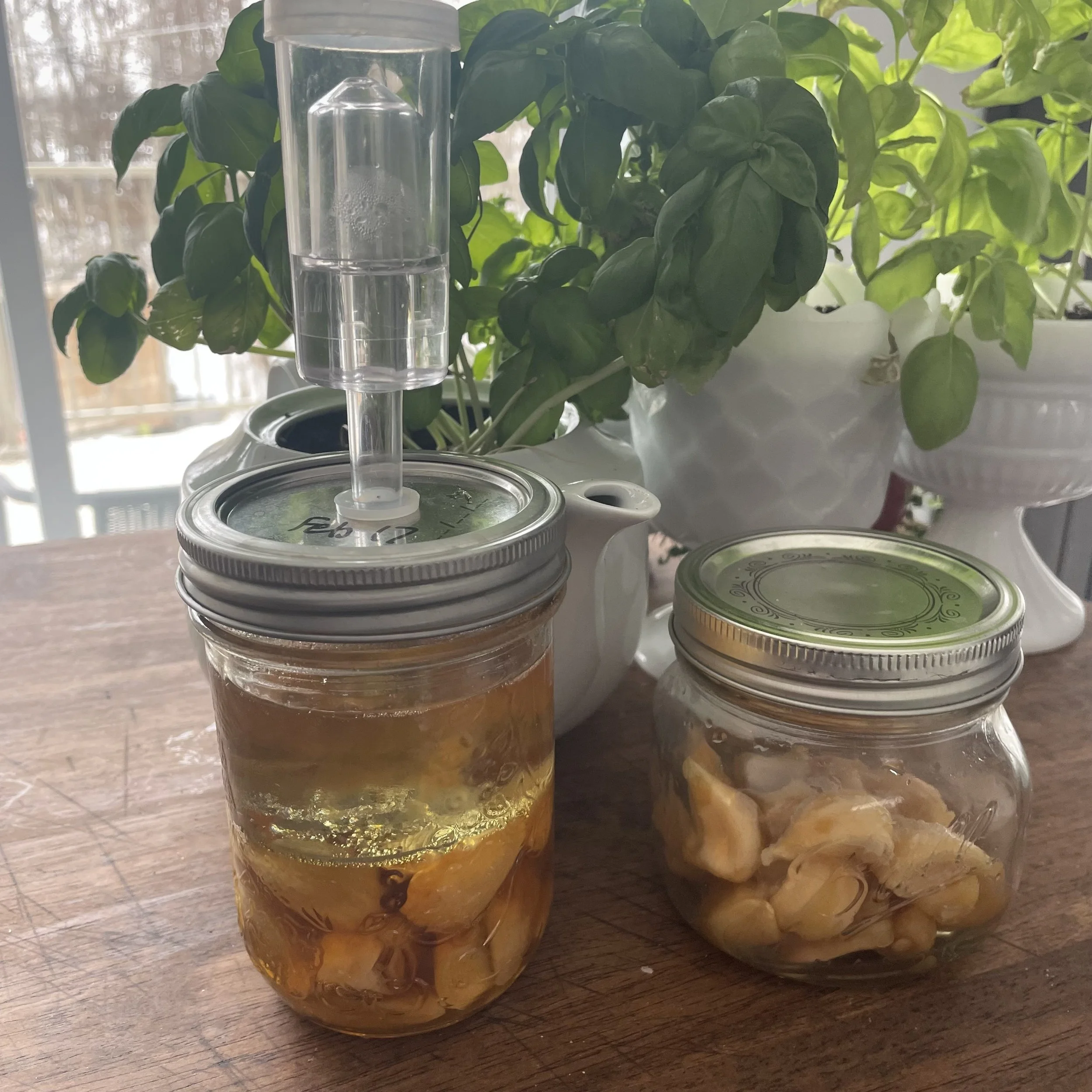
With airlock lid: Ideal, allows gases to escape safely
Without airlock: Close lid loosely and burp daily
6. Let it ferment
Store at room temperature, away from direct sunlight.
Days 1–3: Honey begins to thin
Days 3–7: Bubbling may start
After 2 weeks: Could be ready to use but…
After 5-6 weeks: Maximum benefit and medicinal properties developed + flavour
Why a Dark Place Matters During Fermentation
During the active fermentation phase, keeping your jar in a darker space helps:
Maintain a stable environment for fermentation
Protect the natural enzymes in raw, unpasteurized honey
Prevent temperature fluctuations caused by sunlight
A cupboard or pantry is ideal—simple and consistent.
What to Expect
Honey becomes more liquid
Garlic may float (even with a weight, occasionally)
Small bubbles form
Flavor becomes milder and slightly tangy
During the first week, it’s helpful to gently turn or swirl the jar to keep everything coated.
Medicinal & Traditional Uses
This preparation has long been used as a traditional home remedy.
It may help support:
Immune system health
Sore throats and coughs
Digestive balance
Why it works:
Garlic contains allicin, known for its antimicrobial properties
Honey is naturally soothing and antibacterial
Fermentation may enhance the availability of beneficial compounds
This is a traditional preparation—not a replacement for medical care, but a supportive addition to a balanced lifestyle.
How to Use Fermented Garlic in Honey
Take a spoonful during cold season
Eat one clove daily
Add to:
Salad dressings
Marinades
Roasted vegetables
Meat glazes
Stir into warm tea (not boiling hot)
Storage
Store at room temperature in a dark or dim place, such as a pantry or cupboard, away from direct sunlight.
Keep garlic fully submerged at all times
Can last for several months or longer
Watch the Video
Watch how I make this step-by-step in my kitchen below.
Safety Tips (Important)
Always use clean jars and utensils
Keep garlic submerged under honey
Use a fermentation weight for best results
Burp jars daily if not using an airlock
Discard if:
Mold appears
Smell becomes unpleasant (not just strong)
👉 Bubbling and thinning honey are completely normal signs of fermentation.
How to Use the Honey in Cooking
Don’t overlook the honey itself—once infused with garlic, it becomes a beautifully balanced ingredient that adds depth to both sweet and savory dishes.
Here are some of my favorite ways to use it:
In Dressings
Whisk into vinaigrettes for a subtle sweet-savory balance.
Try it with:
Olive oil
Vinegar (apple cider or balsamic)
Dijon mustard
👉 Perfect over simple greens, roasted vegetables, or grain salads.
🍗 As a Glaze
This is where it really shines.
Brush onto:
Roasted chicken
Pork tenderloin
Salmon
👉 Add it toward the end of cooking so it caramelizes without burning.
In Asian-Inspired Dishes
Garlic honey works beautifully in sauces and marinades.
Use it in:
Stir-fries
Noodle dishes
Marinades for beef or chicken
Pair with:
Soy sauce
Ginger
Sesame oil
Chili flakes
👉 It creates that perfect sweet-salty balance.
With Roasted Vegetables
Drizzle over:
Carrots
Brussels sprouts
Sweet potatoes
👉 Adds a rich, slightly tangy sweetness.
🍵 In Warm Drinks
Stir into:
Tea
Lemon water
👉 Just make sure the liquid isn’t boiling hot to preserve its properties.
“Once you start using it in your cooking, you’ll realize this isn’t just a traditional remedy—it’s an ingredient you’ll want to keep in your kitchen at all times.”
FAQ
Can I use regular honey?
Yes, but raw, unpasteurized honey is strongly recommended.
Do I need an airlock?
No, but it makes the process easier and safer.
Why is my honey becoming runny?
This is a natural part of fermentation.
Can I refrigerate it?
Yes, but it will slow down fermentation.